“A democratic future depends on collective resistance and accountability for war crimes and repressions by the Russian state."- Ekaterina Khazina, Platforma International
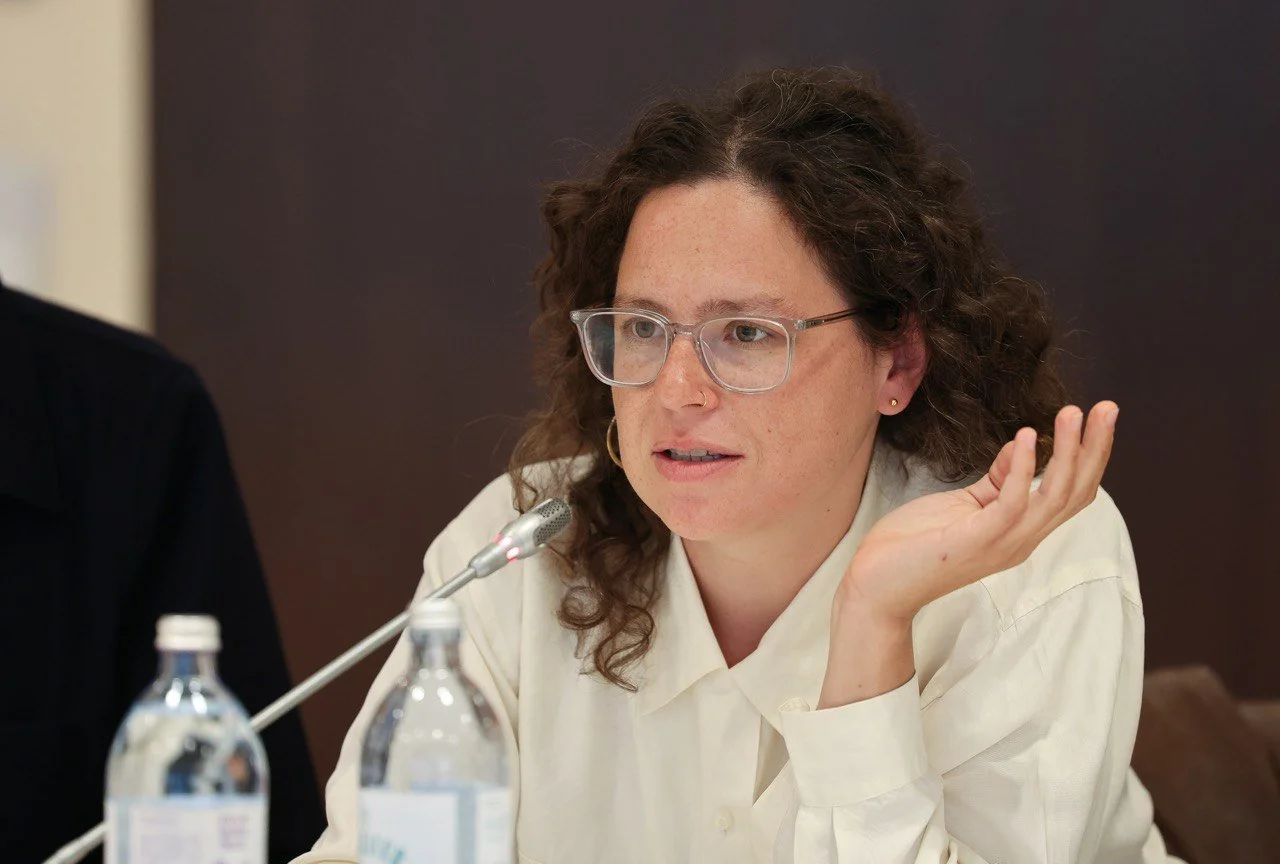
Ekaterina Khazina is a researcher and activist who coordinates projects, crowdfunding efforts, and media campaigns in support of political prisoners in Russia. She is a member of Memorial France and Platforma International — an alliance of Russian anti-war and pro-democracy organisations, activists and research initiatives active on a wide range of issues including human rights, humanitarian law, education, culture, decolonisation, LGBTQ+ rights and feminism.
What does the change you are trying to achieve look like?
Platforma brings together up to 100 participants — individuals and initiatives both inside Russia and in exile — united by a simple truth: Russia’s full-scale invasion of Ukraine constitutes an international crime, and a democratic future can only be built through collective, solidaristic, and courageous resistance to the regime — with full, unavoidable accountability for all war crimes and repressions committed by the Russian state. Grounded in shared principles, voluntary participation, and a culture of mutual respect, we work to make human rights violations in Russia visible at every level, from institutions to public discourse.
We demand the liberation of political prisoners, including Ukrainian civilians, deported children, and prisoners of war, and we support all those resisting authoritarianism. Our efforts focus on combating transnational repression, securing evacuation pathways for activists and human rights defenders at risk, and advancing long-term accountability and justice mechanisms.
One of our current campaigns is People First, an international initiative for the release of captives held as a result of Russia’s invasion of Ukraine. It unites Ukrainian and Russian human rights defenders and engages international partners to strengthen humanitarian response and political pressure.
We do not speak on behalf of activists inside Russia — we speak with them, ensuring that those risking the most are included in every initiative. The aim is always to bring the people on the ground into the room.
We aim for activists from Russia and the wider region to be recognized as legitimate European partners. Our goal is to connect civil society inside Russia and in exile with stable solidarity networks, including EU institutions and international organizations.
We are learning to navigate EU decision-making processes, build campaigns, and collaborate across working groups — from documenting reproductive rights violations in Russia to engaging with international justice mechanisms. To make our advocacy towards the EU impactful, we needed stronger tools to turn testimonies and evidence into concrete proposals. That’s why we reached out to EUChanger: to help us ensure the voices we carry are heard at the EU level.
We have already been able to identify promising opportunities. For instance, the Parliamentary Assembly of the Council of Europe (PACE) has established a platform for dialogue with Russian democratic forces in exile, enabling continued engagement with human rights defenders, researchers, and independent media.
What are some of the biggest challenges you are facing?
It can be difficult to determine whether to concentrate efforts on one key campaign or maintain engagement across several urgent issues. Our network is diverse, and building alignment is an ongoing process. Developing a shared foundation for a democratic, decolonial future for Russia requires time and consistent dialogue.
Fragmentation also complicates funding. To remain credible partners for EU institutions, we must present human rights violations in a systemic, intersectional framework. Platforma International helps us articulate a collective analysis and a coordinated strategy.
Security threats are constant. The Russian state attempts to discredit activists by framing them as extremists or terrorists, influencing how they are perceived by European institutions. Countering these narratives and fighting disinformation remains essential.
The ongoing war amplifies these challenges. We operate against a vast propaganda apparatus and international influence networks. Securing support for conscientious objectors is difficult due to safety concerns. Meanwhile, we continue work on accountability for war crimes in Ukraine and systemic violations inside Russia, in a context that evolves rapidly.
Is there one tip you would like to share with other public interest advocates? What helps you stay motivated and allows you to keep going?
My tip: connect solidarity with accountability, and build alliances rooted in shared responsibility!
Staying motivated requires accepting that this work is a long-term commitment. Even after the war ends, repression in Russia may intensify even more. Work on sanctions, justice, and democratic transition must continue. These are long-term commitments, not temporary campaigns.
What sustains our energy is focusing on practical, human-scale results. If we manage to provide moral support, visibility for one initiative in Russia and evacuate a group of activists, or secure medical assistance for a survivor — that is meaningful progress. These concrete wins help us maintain clarity and continue building systemic change step by step.