“Work with groups that feel far removed from your usual topic... Involve marginalised people directly, so your strategies actually reflect the issues they're facing” Atusa Karbaschi, COSPE
Atusa Karbaschi works for COSPE, an organisation working in Italy and internationally to promote change, eliminate inequalities, and establish social, climate, and economic justice. It does this in partnership with civil society, communities and movements worldwide.
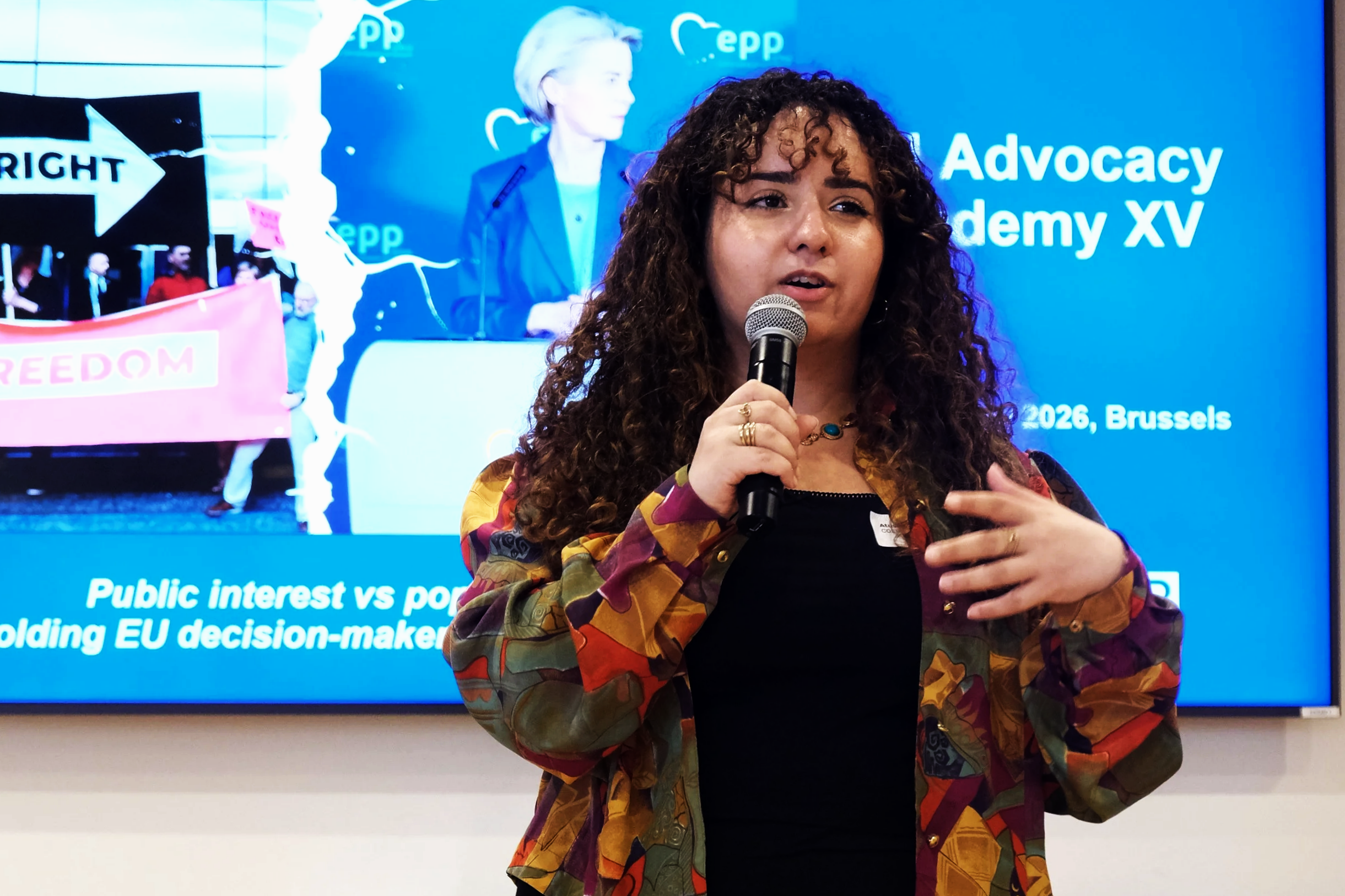
Photo by EUChanger, May, 2026
What does the change you are trying to achieve look like? Why is the EU important?
We are based in Florence, Italy from where we work on international cooperation and on European and local youth projects. The work we do is about supporting youth initiatives, activists, and grassroots movements, empowering them through a collective, care-centred approach, and making sure they know about the tools they actually have to influence decision-making at different levels, including the EU.
I am currently involved in the YOU(TH) CARE FOR CHANGE project which is co-funded by the EU-DEAR Programme. The project aims to encourage younger generations to play an active role in developing transformative agendas in the Euro-Mediterranean region. The project covers 12 Mediterranean countries and aims to support nearly 300 youth groups. Currently, we are running a campaign that focuses on physical, digital, educational, and political spaces for young people.
We need to change how young people see participation, and close the gap between institutions and youth, especially for those who are marginalised or have less access to these processes in the first place. That includes youth from all kinds of backgrounds, including those who face social discrimination.
We bring youth into public spaces, even though those spaces are increasingly shaped by capitalist pressures, to increase awareness of the importance of their involvement in decision-making processes. We also work directly with local associations to help strengthen their skills and strategies.
There's a real lack of space for young people to feel represented and to have a say in their own future.
We've been following the EU Youth Strategy closely, and it's been a key reference point, but I'd like to dig into what else is out there to support this work. Political participation for young people needs to stay a high priority. We also want to put more effort specifically into supporting marginalised youth groups, because there's still a lot of work to do there.
We've partnered with other organisations on this, and it's gone well, so we want to keep building on it: more events, more workshops, things like advocacy simulations with young people who are genuinely excited to take part. What we're really after is creating these non-professional moments that show people how to engage in a friendly way, feel empowered, and feel more European in the process.
Which challenges are you facing?
In Italy, with the rise of the far right,volunteer work has been criminalised and defunded, which makes it harder and harder to keep doing this work. Taking part in political life is also getting more dangerous, because security policies are being put in place that weaken people's right to protest, for example. In the name of security, everything else gets pushed aside, and we can't protest or publicly defend our interests the way we used to.
A clear example of this was hearing the president of the European Commission, Von der Leyen, during last year's Charlemagne Prize ceremony. This setting was a real opportunity for her to talk about European solidarity, sentiment, or youth empowerment, but instead her speech leaned almost entirely on security and on defending ourselves. It showed me exactly where this mandate is heading and it made me realise that this isn't the same EU I grew up with, so we have to work even harder.
We need to break the cycle of populism, because young people are constantly exposed to propaganda and rhetoric that does nothing to improve their situation.
What tips do you want to share with other public interest advocates?
Work with groups that feel far removed from your usual topic. If you're focused on youth empowerment, for example, don't just look at groups that are already inside the bubble, go beyond the system you're used to working in. Involve marginalised people directly, so your strategies actually reflect the issues they're facing, not just the ones that are easiest to see.
It's also worth seeking out more critical-thinking groups, including the ones who are sceptical that anything will really change. And if you happen to work inside EU offices, use that privilege: bring in perspectives that support the public interest.