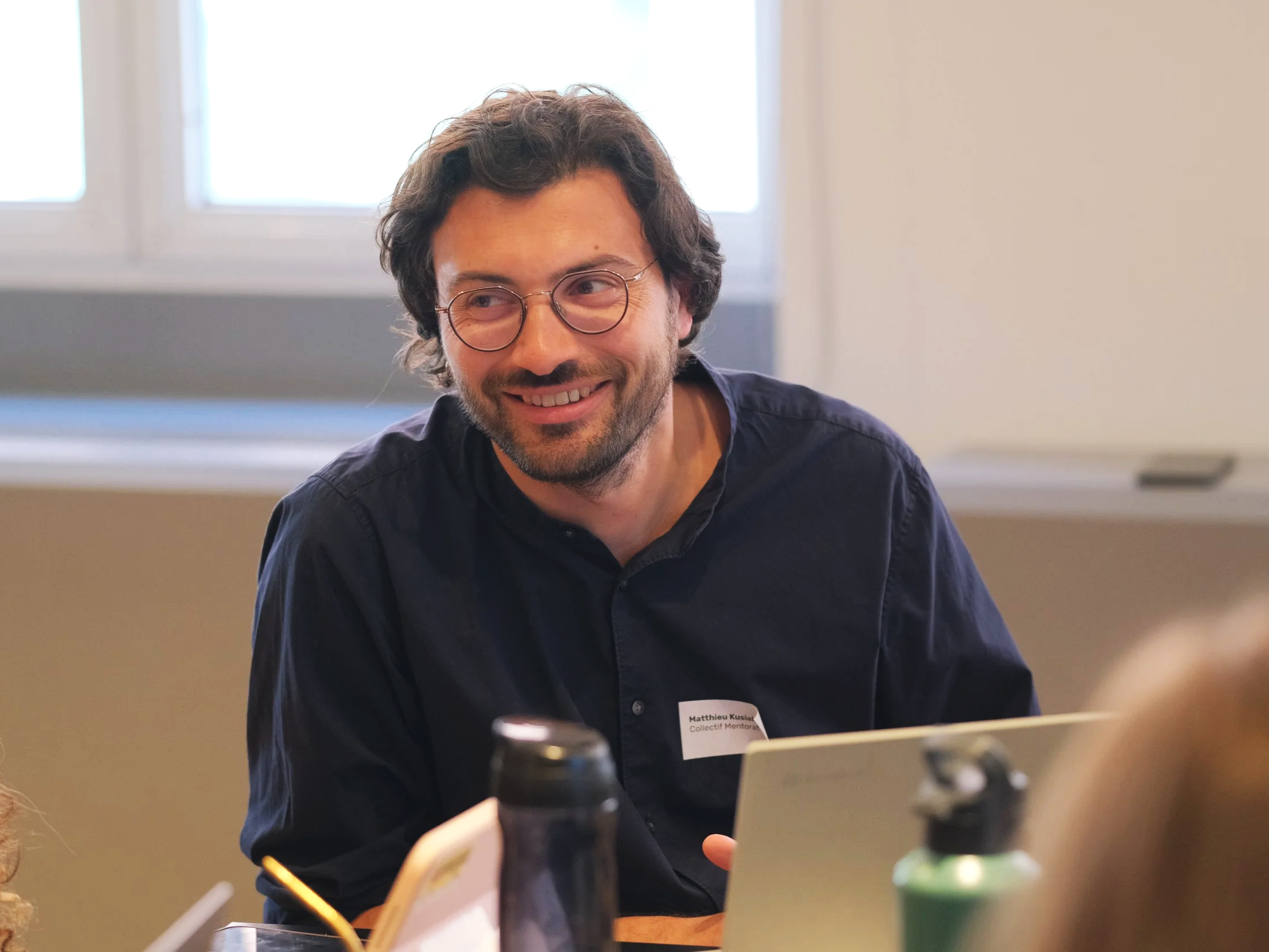
“Don't wait until you feel fully ready. Start with what you have, and things will unfold from there” Matthieu Kusiak, Collectif Mentorat
Matthieu Kusiak is the Deputy Director of Collectif Mentorat, an organisation that advocates for the right to mentorship. Collectif Mentorat works with around 80 member organisations and partners with many companies, public and socio-educational actors.
What does the change you are trying to achieve look like? How does the specific context look in your country? Why is the EU important for your work?
Mentoring is a structured and voluntary relationship, facilitated and supervised by a professional organisation, in which a trained volunteer mentor offers regular, goal-oriented guidance, encouragement, and access to opportunities for a mentee. Built on trust and mutual learning, mentoring strengthens personal development, builds capabilities, and serves as a powerful driver of social inclusion, community impact, and the reduction of inequalities, ultimately contributing to a more cohesive and equal society.
Thousands of people already benefit from mentoring, yet it isn't recognised as a public policy priority. We want to change that — to scale up mentoring and make it a relevant issue for both EU and national policy, so it develops in a harmonised way across member states.
We collaborate with national umbrella organisations in Spain, Germany, Belgium, and Austria to help raise mentoring's profile at EU level. The EU is particularly important when it comes to access to funding. And although this is a complex topic, the work we've done nationally has been valuable — what we want now is to institutionalise it more deeply, so the progress made at national level can endure even through political change.
Which challenges are you facing?
Mentoring doesn't have the visibility as topics like the environment or human rights, which have received a great deal of attention. We still need to help people understand what mentoring actually is. It isn't just about wellbeing — it's also about competitiveness and the labour market. It connects to other sectors too, such as migration and employment, and there are ways it can be supported across different policy areas.
At EU level, there's currently not enough initiatives developed on this front. But for the past five years, with the network Mentoring Europe, we've been working on new initiatives, engaging with the European Committee of the Regions, the Parliament, and working toward the next Multiannual Financial Framework to give mentoring greater visibility.
Many organisations already link their mission to mentoring through the work they do with their target groups. For instance, an organisation working with migrants might naturally connect that work to youth support and labour-market integration. There's an opportunity to bring more coherence to this landscape and make the case for why mentoring matters.
The main challenge relates to resources, but also to the fact that our topic doesn't tackle one specific piece of legislation — it can be linked to several different pieces, and it isn't an EU priority. We need to work harder to find the right anchors and get it onto the agenda.
What tips do you want to share with other public interest advocates?
Don't wait until you feel fully ready. We have limited resources, but we know there's momentum right now to work toward the next EU budget. Start with what you have, and things will unfold from there — you'll find the support you need to keep working toward your goals.